In 1973, during a return visit to her childhood home in Little Glemham, a small village in a rural part of Suffolk, my mother, accompanied by my younger brother (initials DMS below), spoke to the parish priest after the service there, when they met a member of the local aristocracy, Lady Blanche Cavendish, as she had been known by the village before her marriage. The animated conversation was reported to me later more or less as follows:
Lady B: “What are you doing in East Anglia?”
DMS: “My mother was born here.”
LB: “What was her maiden name?”
DMS : “Grace Pryke”
LB: “I knew Walter Pryke. He was a headmaster here”
DMS : “Yes, he was my uncle”
LB : “Where do you live now?”
DMS : “Ottawa”
LB : “I used to live in Ottawa”
DMS : “Oh! What part?”
LB: “Rockcliffe”
DMS : “What part of Rockcliffe?”
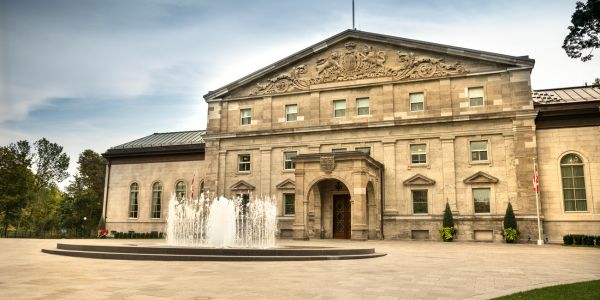
LB : “At Rideau Hall. My father was Governor-General”
DMS : “When did you live at Rideau Hall?”
LB : “In 1919”
DMS (who knew his Canadian history) : “Your father was the Duke of Devonshire!”
LB : “Yes, he was.”
That a young undergraduate then attending the University of Toronto (in 1973) and visiting his mother’s birthplace in a small village in rural East Anglia should meet the daughter of a Canadian Governor-General who had herself visited her own father in Ottawa a half-century before, in 1919, is proof that our planet is smaller than we think it is. Both my mother (1921-2017) and my younger brother were most impressed by Lady Blanche, who was then very advanced in age, but clearly still had her wits about her.
Ever since Vincent Massey, after whom an Ottawa park is named, became Governor-General in 1952, he and all subsequent holders of this position have been Canadian-born, but before this, all had been British-born, Lady Blanche’s father, the Duke of Devonshire, one of the last, occupied this post between 1916 and 1921. His name is today carried by an Ottawa retirement home. Lady Blanche lost her husband when he was killed by a V-1 flying bomb while at church on June 18, 1944. She had been recently married in 1919, returned to England, and died and was buried in that same village church in 1987, after having lived as a widow in Great Glemham Hall for 43 years. By all accounts, she was a remarkable woman and completely unimpressed by status, wealth, or position, and for her lack of pretension and many kindnesses to her parish and community, was beloved by the villagers themselves.